
Discover the timeline of Universal Basic Income Projects Worldwide.
A Timeline of Basic Income Projects in the World.
3
Types of
UBI
Projects
- Universal – automatically available to everyone in the cohort
- Unconditional – no compliance required but targeted/means tested
- Conditional – means tested
Ireland
Two thousand artists will receive 325€ ($349) a week for three years randomly selected from the 9,000+ who applied. They need only meet the eligibility requirements of participating in the arts. Results of the pilot will be tracked and compared to a control group.
Catalonia
In January 2023, Catalonia will launch a pilot involving 5,000 people who will receive 300€ ($322) to 950€ euros ($1021) a month depending on their age, income, and household size. It will last until December 2024.
Democratic Republic of Congo
Expanding the pilot that was launched in 2021, a program covering the entire region in the Kalima, Maniema province will provide all residents with a monthly cash transfer of 20€ ($21) for adults and 10€ ($11) for those under 18 through their guardians.
Wales, UK
This program will give £19,200 ($23,982) a year to 500 18-year-olds leaving care (transitioning foster youth) for two years.
Germany
Spain
The Spanish Government approved a guaranteed minimum income for 850,000 households on May 29, 2020. It will provide a minimum of $514 to a maximum of $1,230 per month depending on the size of the household. This program is expected to reach some 2.3 million people including adults between the ages of 23 and 65. Conditional.
Japan
Launched in April by Yusaku Maezawa, the Maezawa Basic Income Social Experiment 2020 is a private giveaway ofnearly $9.5 million to one thousand people randomly chosen from Maezawa’s 4.3 million followers who retweeted his tweet. One group will receive a lump sum and the other, a monthly payment for a year. Unconditional.
Germany
The privately funded HartzPlus experiment was launched in 2019 and involves 250 randomly selected welfare recipients who will receive $450 a month for three years regardless of their status in the welfare system. Unconditional.
Barcelona, Spain
Sponsored by the Barcelona City Council, the B-MINCOME project is a two-year Randomized Control Trial for 1,000 randomly selected households from the city’s poorest districts. They receive a maximum cash transfer of $1,810 a month. Unconditional.
Ontario, Canada
The pilot project was launched in 2018 in the communities of Hamilton, Brantford, Thunder Bay and Lindsay. Participants of the project were randomly selected among residents of the regions aged 18–64. The financial threshold for inclusion was $24,380 per year for singles or $34,420 per year for couples. In addition to the 4,000 participants, a comparison group was selected, who would not receive the basic income. It was meant to run for 3 years but was cancelled after about 17 months by a newly elected provincial government. Unconditional.
Finland
The Government of Finland tested basic income as a potential new model for the Finnish social security system, providing a payment of 560 Euro (approximately $625) per month to 2000 persons. The experiment has a research focus on studying the effects of the provision of basic income on employment. and recipient wellbeing. Conditional.
Kenya
GiveDirectly is a privately funded project that has already distributed millions of dollars to 20,000 individuals living across 197 villages, and an additional 100 villages have been surveyed as a control group. Some individuals will receive payments for 12 years, and the full research study they have undertaken will last at least that long, but initial results are expected in 2020. Unconditional.
Brazil
Brazil has been investigating UBI since 1975. The City of Maricá is currently providing $282 per year to 42,000 beneficiaries. To qualify, individuals need to be entered in the National Register, belong to households earning less than three times the Brazilian minimum salary, and have lived in Maricá for three years. Conditional.
Iran
In 2011, the government started monthly deposits of cash into individual family accounts amounting to 29% of the median household income. It was implemented based on several years of oil-induced economic growth. That changed markedly in 2012 when economic sanctions were imposed on Iran. Universal.
India
Madhya Pradesh Unconditional Cash Transfer Program funded by UNICEF was conducted by the Self-Employed Women’s Association for a year and a half. The pilot project studied 20 villages: eight where unconditional cash payments were made monthly to every individual, and 12 control villages where no payments were made. Unconditional.
Brazil
In 2008, a Brazilian nonprofit, ReCivitas Institute, administered a basic income, funded by private donors, in the village of Quatinga Velho. One hundred residents received 30 reais (about $8) per month. The program has been made permanent and the amount increased to 40 reais (about $10) per month. Unconditional.
Namibia
In January 2008, a Basic Income Grant (BIG) pilot project was launched in the Otjivero-Omitara area. All residents below the age of 60 years received a grant of N$100 ($5.43) per person per month, without any conditions being attached. The grant was given to every person registered as living there in July 2007, whatever their social and economic status. Universal.
Canada
The province of Manitoba and the federal government funded a guaranteed annual income in Winnipeg and Dauphin. Low-income residents in Winnipeg (excluding persons with disabilities and retirees) were randomly selected to receive one of three levels of income support: $3,500, $4,500 or $5,500 (equivalent to $18,325, $22,239 and $28,796 in 2020), indexed to inflation. Unconditional.
Here is a comprehensive list of countries that are considering some form of basic income guarantee.
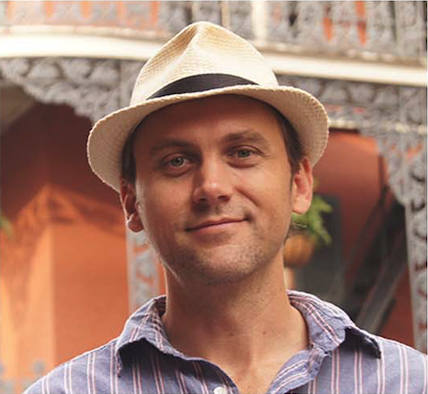
Scott Santens
EDITOR, BIT
Writer and unconditional basic income advocate who believes our civilization is better than this.